Heading out of inner-city Sydney, we embarked on our adventure in an enormous Apollo Euro camper. The roads narrowed as we left the urban landscape behind, and I could feel the anticipation building. We – two adults and our two small children – were eager to immerse ourselves in the rugged beauty of the remote north-west of New South Wales, a region often overlooked by travelers seeking an outback "experience".
As we prepared for our journey, we sought accommodation close to the city center. We discovered a range of hotels in Sydney near centre at newsouthwaleshotels.net, providing us with a convenient and comfortable base to start our outback exploration.
We’re reasonably keen campers but when the offer of a van materialises from Apollo campers, the thought of not having to put the tent up each night is quite exciting.
Inside, the Euro camper feels fairly roomy, at least before we unpack our bags. There are two table and chair areas, both of which become a double bed. There’s also a bed above the cabin, which, unsurprisingly, our five-year-old favours. The straps that need to be put up to stop kids (or adults) rolling out make it a bit of a pain when our two-year-old cries in the night, however, and we all switch beds a few times.

Our campervan adventure takes us to Gundabooka National Park, located south of Bourke. This picturesque park provides a stunning backdrop for our outdoor getaway.
Equipped with essential amenities, our campervan boasts a gas-stove kitchen, complete with all the utensils we need to cook up delicious meals. On top of that, we have a TV-DVD player for entertainment and a convenient shower and toilet facility. This ensures our comfort and convenience throughout the trip.
Our journey begins in Dubbo, known for its Western Plains Zoo. After a cautious eight-hour drive, mainly to accommodate the needs of our little ones, we finally reach our destination. Maneuvering the large campervan can be challenging, as the limited rear visibility can be a little disconcerting. Although the reversing camera does provide some assistance, it's not recommended to attempt reversing without a guide. While the camera is useful in town driving, it does not offer much help in navigating forward.
In order to truly immerse ourselves in the breathtaking scenery of the outback, we rely on our sense of adventure and appreciation for nature, rather than solely relying on technology. Exploring the red dirt landscapes and marveling at the brilliant night sky full of sparkling stars is an experience that words cannot do justice.
In Dubbo we stay at the BIG4 campground, where a night on a powered site for a van like ours costs $57 for the family. In the morning the kids fall in love with the play equipment and bouncing pillow – think bouncy castle minus the walls. The setting is convenient, almost within shouting distance of the free-range zoo, even if the piped (and loud) commercial radio in the bathrooms, coupled with the replica suburban streets is, for the purposes of our city escape, not ideal.
At the zoo, the kids have been sold on a drive-through safari in which lions claw at the car. In the end we rent bikes with trailers ($40 for a bike and a “bike-n-tow” on top of the two-day $131.40 family ticket) and make our way through the vast setting, catching the usual big favourites; an energetic tiger, giraffes and elephants standing out for the kids. Biking through the bush makes it a special day. It’s the most kid-friendly thing we have planned so it’s a relief when it gets the thumbs up from our five-year-old.
In the afternoon, we mingled with a sizeable crowd of traveling retirees at the cost-free Terramungamine campsite located just outside the boundaries of Dubbo. This area bears witness to its historical custodians, who used the riverside rock formations for their tool-sharpening purposes. Imprints of those deeply embedded ancient toolmarks remain highly visible.
As twilight descended, I relaxed by the river, the kids engrossed in an episode of Dora the Explorer on the campervan's TV. The fuzz of activity in the crimson hues of the evening sky is hard to miss as fleets of sulphur-crested cockatoos, galahs, and corellas flew overhead, vying for space on the towering red gum trees lining the river.
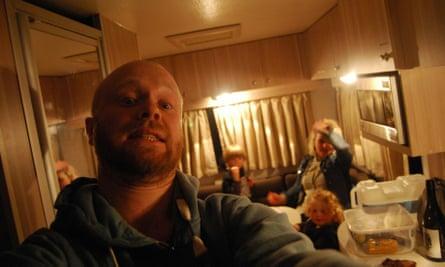
Dinner time in the van can be a cozy and intimate affair, where you can enjoy a meal while surrounded by the beauty of the outback. As the sun sets, the red dirt beneath your feet takes on a warm glow, adding to the magical atmosphere.
In the morning, as you wake up to the sound of black cockatoos soaring overhead, you realize just how far away you are from the bustling city life. Embarking on a journey along the highway north, you'll come across towns like Gilgandra and Coonamble, each with its own faded charm.
The rugged beauty of the Warrumbungles awaits you, its awe-inspiring landscapes leaving you in awe. Moving further north-west, you'll witness the vast, flat plains of New South Wales, stretching as far as the eye can see.
Stopping at Walgett, you become aware of the incredible diversity that exists within this state. It's a stark contrast from the bustling streets of Sydney. As you stock up on supplies at the local supermarket, you can't help but notice the higher prices locals pay due to the tyranny of distance.
Walgett also serves as a reminder of the practicalities of outback travel. It's where you'll need to empty the unappetizing toilet "cassette" at an approved dump spot, which can be a rather unpleasant task. The thought of enduring the outback summer with such an odorous job in hand makes you contemplate implementing a complete toilet ban.
After leaving Walgett, you make a vow to find alternative solutions and steer clear of using the toilet onboard the campervan. With so much more to explore in the outback, it's a small sacrifice to make.
On the road again we note that the long-running drought in this country has eased and heavy rains have turned the land from shades of yellow and ochre – at Brewarrina, you start to get that sense of “outback” so often defined in the popular consciousness by the presence of the red soils – to the luscious greens of fresh grasses. The land is now in bloom with yellow flowers. With a dead straight road shimmering ahead, a deep blue sky and flashes of iron-rich earth, it’s a beautiful scene.
We stop to admire a flock of emus and the kids strain their necks – while it’s fun for them to sit at a table while we travel, the windows of the camper are too high and a bit small for little ones to get a good view. They unbuckle to check out the gangly birds at the side of the road.
Brewarrina, with a population just over a thousand, is not a typical holiday destination. It’s clear there are problems of crime, disadvantage, drug abuse and broken families (that’s what has brought me here before for work as a film-maker). But in remote Indigenous communities people face the same struggles. It’s something visitors to the outback must contend with and, hopefully, learn from. The people of Brewarrina and other places, after all, are guardians of a remarkable cultural heritage which enriches the whole nation. So what if there are a few dumped cars around.
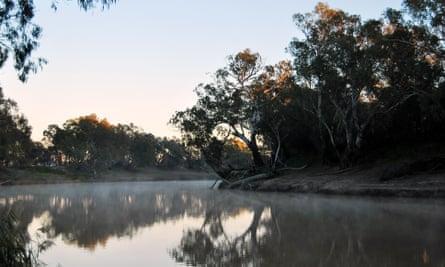
At daybreak, the Barwon river in Brewarrina greets the sun.
Large-scale tourism remains a distant reality in this town. However, nestled just outside Brewarrina, Beds on the Barwon promises a unique advantage against other competitors should more tourists start to seek tranquil cabin accommodations and beautiful camping sites. Access to a powered site costs $30, while an unpowered site can be rented for $20, both sites situated conveniently by the river. During our visit, we were in the company of just one other couple. As the sun's golden rays penetrated through the gum trees and the enchanting sounds of outback birdlife filled the atmosphere, we gathered timber for our campfire, assuring ourselves that this was indeed the tranquillest corner of the planet.
Two-year-old Rosa throws a huge tantrum before bed, momentarily breaking the serenity. With two kids, the van is now a rubbish tip. There are quite a few cupboards but books colouring pencils and socks are strewn across the floor – so it’s a bit like home. The grown-ups are fraying at the edges but it’s easy to get some space by taking a breather outside. In wet weather I’m not sure this would be doable.
At night our son, Frankie, and I play with a smartphone app to make sense of the staggering numbers of stars above. Out here you see more than constellations; with the milky way tearing across the heavens, huge patches of both cloudy light and dark are visible: we make out the emu known to holders of Indigenous sky-knowledge.
While enjoying my breakfast, a wild goat catches my attention as it leisurely makes its way along the riverbank. Interestingly, a kayaker accompanies the goat, claiming that it has been leading the way for the past couple of kilometers. It fascinates me how these unexpected companionships can form even in the vastness of the outback.
As I relax by the river, cherishing a well-deserved break, a sense of adventure fills me with enthusiasm. I gaze across the tranquil waters and catch sight of various bird species, including an eagle, a majestic kite, graceful pelicans, and what I believe to be colorful budgerigars. Little moments like these hold the promise of future journeys, like the kayaker's epic 2,000km paddle from Goondiwindi in Queensland to Wentworth, where the mighty Darling river meets the Murray. One day, I too will embark on my own outback expedition and experience the awe-inspiring wonders that this vast land has to offer.
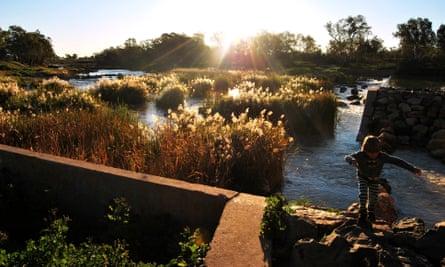
Exploring the wonders of Brewarrina, one cannot miss the ancient fishtraps veiled under the reeds. These fishtraps, crafted by the Ngemba people centuries ago, stand as a tangible testament to the region's rich cultural heritage predating the European presence. Despite the unfortunate effects of neglect and destruction, the traces of these fishtraps can still be discerned amidst the contemporary weir and the ingenious fish "ladder" designed to facilitate the upstream migration of fish. The river itself appears to be thriving, adorned with an abundance of reeds that bestow upon the surroundings a serene ambiance. Engaging in conversation with some amiable locals on the riverbank, we strive to unravel the mysteries hidden within this historic site.
Did you know that the Brewarrina fish traps were built thousands of years ago? These remarkable structures not only serve as a reminder of the area's ancient significance but also highlight the ingenuity of the Ngemba people in creating a sustainable fishing solution. As we observe the modern weir and the fish "ladder," it becomes evident that efforts are being made to preserve and restore this cultural treasure. Immersed in the tranquil beauty of the majestic river, surrounded by swaying reeds, one cannot help but marvel at the enduring legacy of Brewarrina's historical and natural wonders.
Leaving behind the comforts of the city, we embarked on a campervan journey through the remarkable landscapes of New South Wales' outback. Our first stop was Gundabooka National Park, accessible via the charming town of Bourke.
As nature enthusiasts, we were adequately prepared with supplies and entertainment for our little adventurer, Dora. However, a minor setback occurred when our car refused to start in the town of Bre. Thankfully, two wise elders came to our aid and with their help, we managed to give the engine a push start, igniting our gratitude towards their assistance.
Despite the initial hiccup, our battery mysteriously regained its energy by the time we arrived in Bourke. Taking a moment to explore, we wandered through the town, marveling at the historic port and the preserved charm of old buildings. It was intriguing to observe the multitude of businesses proudly incorporating the iconic phrase "Back o' Bourke" into their names.
With time being of the essence as we followed our tightly packed itinerary, we decided to continue our journey. Every corner of the outback held its own allure, and even though we bid farewell to Bourke, we were eager to uncover the wonders that awaited us ahead.
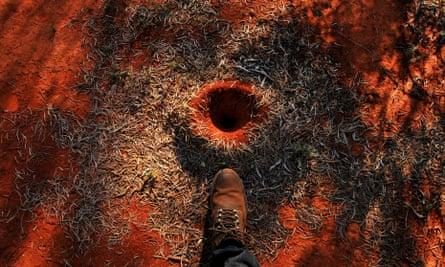
Exploring the vast outback of New South Wales unveils hidden wonders, such as the intriguing activities of mulga ants near Mount Gundabooka. Scientists theorize that these resourceful creatures construct levees to safeguard their nests from floods during heavy downpours.
Embarking on a campervan trip, we embarked on an adventurous detour, leaving the comfort of the highway behind as we traversed more than 20km of dirt track to reach one of the campsites at Mount Gundabooka, located around 50km south of Bourke. As we settled in for the night, the tranquil serenity of the area enveloped us, and I ventured away from the comforting crackle of the fire, venturing into the darkness where silence reigned supreme. The stillness was so profound that my own heartbeat seemed deafening, interrupted only by the distant call of an owl echoing across the seemingly infinite kilometers. And once again, the night sky dazzled above, showcasing a celestial spectacle of stars.
As the sun rises, we embark on a morning hike through the dense mulga scrub, reaching the top of Little Mountain. From this vantage point, we are greeted with a breathtaking view of Mount Gundabooka and the vast surrounding flats. It's reassuring to know that we have Telstra coverage in case our van encounters any issues, but luckily, it starts without a hitch.
We continue our journey towards one of the two Ngemba rock art sites in the park, traversing a long, dusty track that stretches across the vibrant red dirt. After a 15-minute walk into a rocky valley, we arrive at the site. Despite being drawn in a distant era, the simplicity and beauty of the figures depicting people, emus, and intricate patterns leave us in awe.
Before our return to Sydney, we decide to take a break in the historical mining town of Cobar. Here, amidst our admiration of our country's rich Indigenous heritage, we encounter a tourist attraction of a different kind. The colossal open-cut goldmine offers a fascinating glimpse into the depths of the earth, captivating our curiosity.
In this unforgettable campervan adventure, we have witnessed the natural splendor of New South Wales' outback, from the iconic red dirt beneath our feet to the mesmerizing stars that illuminate our nights. Throughout our journey, we have been reminded of the deep connection to the land held by Indigenous communities, as evident in the Ngemba rock art and the historical significance of Cobar as a mining town. Truly, this trip has unfolded as a vivid tapestry of history, culture, and breathtaking landscapes.
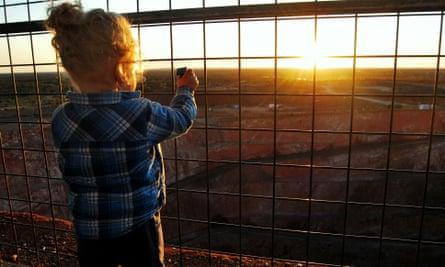
Looking out over the deep open-cut goldmine on the edge of Cobar
It’s all been a whirlwind; in just under a week we’ve seen a great deal and the changes in our surroundings have been immense, all within a single corner of this admittedly large state. We look down as a huge (but tiny) truck meanders up to the exit, laden with ore from which gold bullion will be produced.